
Is Joint Degeneration the Hidden Cause of Your Knee Pain?
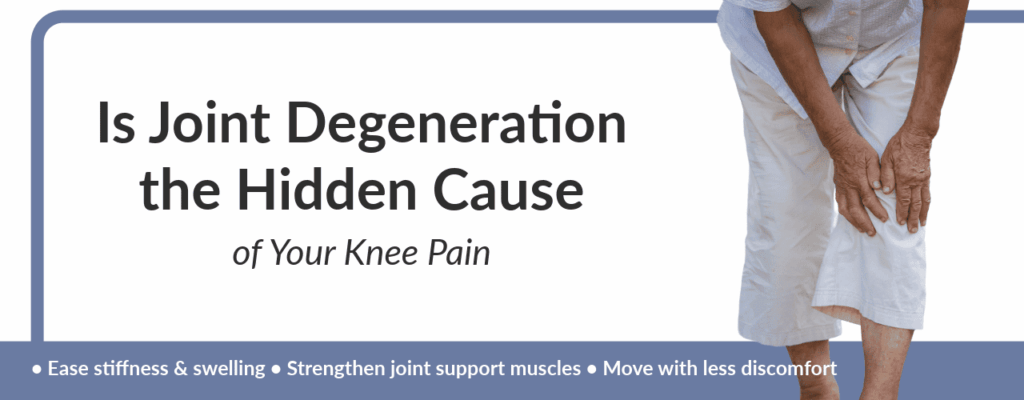
Many adults experience knee pain that starts gradually and worsens over time. You might feel stiffness when getting out of bed, discomfort when climbing stairs, or a dull ache after sitting for long periods. For many people, this pain doesn’t come from an injury. It’s knee pain and joint degeneration caused by wear and tear inside the joint.
Joint degeneration, often called osteoarthritis, happens when the protective cartilage that cushions your bones breaks down. This damage causes inflammation, stiffness, and pain, making even simple movements harder. The good news? With early intervention and guided physical therapy, you can slow this process and keep your knees strong and mobile.
Joint Degeneration and Its Impact on the Knees
The knee joint carries much of your body’s weight and absorbs impact every time you walk, run, or climb. Over time, this repetitive stress can wear away cartilage, which causes the bones to rub against each other, triggering inflammation and pain.
Common Signs of Knee Joint Degeneration
- Aching or stiffness after resting or waking up
- Swelling or warmth around the knee
- Cracking, popping, or grinding sensations
- Limited range of motion or difficulty bending the knee
Common Causes and Risk Factors
- Aging and natural cartilage wear
- Prior knee injuries (like meniscus tears or ligament damage)
- Excess weight, which can place added stress on joints
- Repetitive physical activity or heavy labor
- Family history of osteoarthritis
How Physical Therapy Treats Knee Pain and Joint Degeneration
Physical therapy helps you manage knee pain by improving movement, strengthening supporting muscles, and teaching strategies that protect your joints. At Orthopedic & Balance Therapy Specialists, our physical therapists use evidence-based techniques tailored to your unique condition and activity level.
Your first visit will include a comprehensive evaluation of your pain levels, strength, and mobility. This assessment helps your therapist design a personalized treatment plan that addresses the root cause of your pain.
Although it may sound counterintuitive, controlled, focused movement is one of the best ways to address knee pain and joint degeneration. Regular low-impact exercises such as swimming or cycling can keep your joints lubricated and your muscles engaged. Prolonged inactivity can lead to stiffness and muscle weakness, which worsens joint discomfort over time.
That’s why our treatment approach at Orthopedic & Balance Therapy Specialists focuses on helping you be as active as possible.
Common Physical Therapy Treatments
Manual Therapy
- Hands-on techniques to reduce stiffness and improve joint motion.
Strength Training
- Targeted exercises that build the muscles around your knee, helping them absorb stress more effectively.
Balance and Gait Training
- Improves stability and reduces the risk of falls or compensatory movement patterns.
Education and Home Exercise Programs
- Helps you continue safe, effective care between sessions.
Preventing Further Degeneration
While you can’t reverse cartilage loss, you can take meaningful steps to protect what remains. Physical therapy promotes:
- Stronger muscles that stabilize the joint
- Better alignment and posture during movement
- Improved mobility that reduces stress on cartilage
- Increased confidence in everyday activity
Start Managing Your Knee Pain Today
Knee pain and joint degeneration don’t have to control your life. With proper guidance from Orthopedic & Balance Therapy Specialists’s skilled therapists, you can restore strength, improve mobility, and return to activities you enjoy.
If you notice recurring stiffness or knee pain that limits your daily movement, don’t wait for it to worsen. Call our Indiana clinic today to learn more about your treatment options or schedule a visit to find out whether physical therapy can help you move comfortably again.